Why Merino Wool Underwear Is Worth It and How to Choose
You're twelve hours into a travel day. You've been through a train, a layover, and a taxi in 30-degree heat. Everything else is holding up fine — but your underwear crossed a line somewhere around hour six.
It's the thing nobody warns you about when you start optimizing how you pack. You research carry-on bags, roll your shirts, maybe even switch to merino tees. But the layer closest to your skin? That's often the last upgrade people make, and the first one they notice once they do.
Synthetic underwear tends to trap odor quickly. Cotton holds moisture and takes a long time to dry. And packing a full week of either takes up space you'd rather use for almost anything else. This is where merino wool underwear enters the conversation — and why it keeps showing up in travel forums and one-bag communities as a near-universal recommendation.
But merino underwear costs significantly more than what most people are used to paying. That's a fair concern, and worth addressing honestly before you spend the money.
This guide breaks down what merino actually does differently, whether the price premium is justified, and how to choose the right pair if you decide to try it.
Where Merino Actually Outperforms Cotton and Synthetics
You don't need a textile science degree to evaluate merino wool underwear. What matters is how the fabric performs in the situations where underwear gets tested hardest — long days, warm climates, limited laundry access.
Odor resistance is the headline benefit. Merino fibers naturally resist retaining odor, which means a pair of merino boxer briefs tends to stay noticeably fresher between washes than cotton or polyester equivalents. Results vary with activity level, climate, and individual body chemistry, but this is the property that makes the biggest practical difference for travelers.
Moisture management is the second. Merino can absorb moisture vapor without feeling damp against your skin — a combination that cotton can't match. It also dries faster than cotton in most conditions, though actual dry time depends on humidity and airflow.
Temperature regulation is less obvious but still useful. Merino helps moderate skin temperature rather than simply insulating, which means it can work in warm weather, not just cold. If you want a deeper look at how this plays out across seasons, this piece on merino's transition-weather versatility covers it well.
Softness is the concern that stops a lot of first-time buyers. If your only reference point for wool is a scratchy sweater, that's understandable. But fine merino — typically in the 17.5–18.5 micron range — sits well below the threshold where fibers feel prickly against skin. Research on fiber diameter and skin comfort has generally placed the discomfort boundary around 22 microns, which means quality merino underwear shouldn't itch.
For a broader look at merino's properties beyond underwear, The Ultimate Guide to Merino Wool goes into more detail.
Is Merino Underwear Actually Worth the Price?
A single pair of merino wool underwear can cost three to five times what a basic cotton pair costs. That's a real number, and it deserves a straight answer.
The case for merino underwear isn't about any single pair being luxurious. It's about how many pairs you need.
If you can comfortably rotate two or three pairs of merino on a trip — wearing each for more than one day between washes — you may be able to leave four or five cotton pairs at home. That's meaningful space back in a carry-on, and fewer laundry stops on a longer trip.
Durability is part of the equation too, though it requires honesty. Merino is reasonably durable when you follow care instructions, but it's not bulletproof. Rough washing, high heat, and fabric softener shorten its life. If you treat it well, a good pair can last a long time. If you don't, you'll be disappointed.
The better way to think about the cost is per-wear or per-trip rather than sticker price. A pair that travels with you on twenty trips at a fraction of the luggage cost earns its keep differently than a pair that sits in a drawer.
Many frequent travelers consider merino underwear one of the higher-value upgrades they've made — that sentiment comes up often in gear forums and travel communities. But your own travel frequency and priorities matter. If you take one short trip a year, the math changes. If you travel regularly or prioritize packing light, the practical case for merino as a performance fabric is easier to justify.
How to Pick the Right Pair
Not all merino underwear is built the same way. Here's what to evaluate before buying.
Fabric weight. Lightweight merino in the 150–170 gsm range tends to suit most travel and warm-weather use. Heavier weights add warmth for cold climates but can feel too warm for everyday wear. For year-round underwear, lighter is usually the safer bet.
Blend vs. 100% merino. Many merino underwear brands add a small percentage of nylon or elastane for stretch and structural durability. This is common and generally practical — a touch of synthetic helps the garment hold its shape through repeated wear and washing. The trade-off is that blended fabrics may gradually lose some odor-resistance advantage over time compared to pure merino, but the fit and longevity benefits are usually worth it.
Fit and style. Boxer briefs are the most common choice for travel because they reduce chafing and stay in place under any pants. That said, briefs and trunks exist in merino too — personal preference matters here.
Construction details. Flatlock seams and a gusseted crotch reduce irritation on long travel days. These are small details that make a noticeable difference when you're wearing the same pair for an extended stretch.
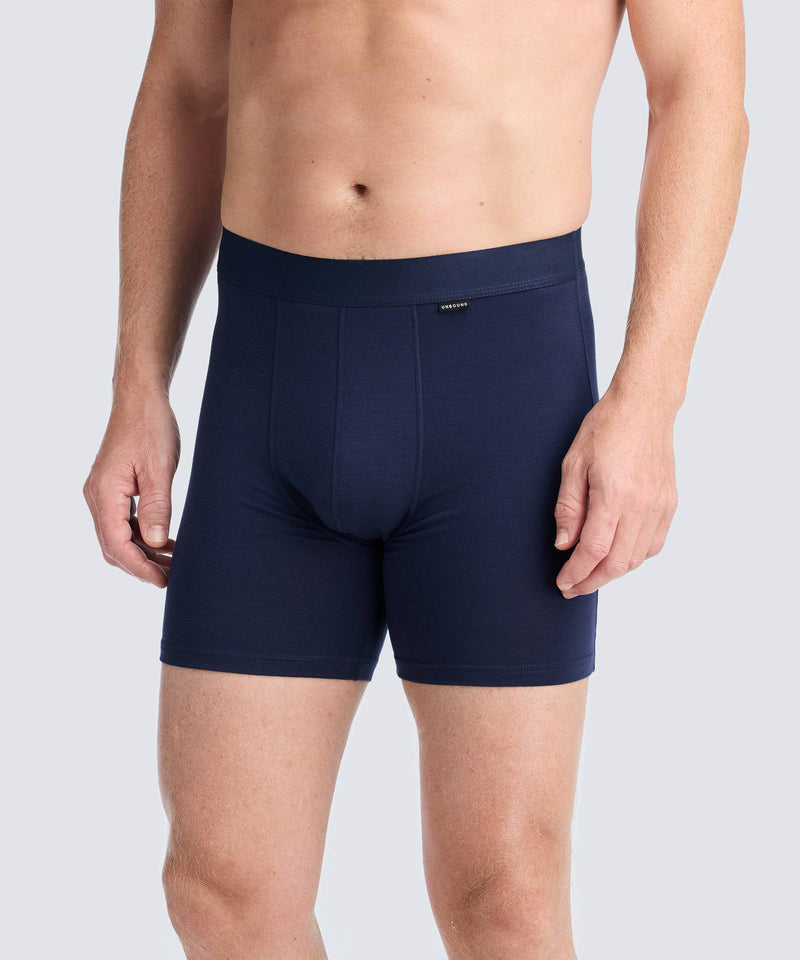
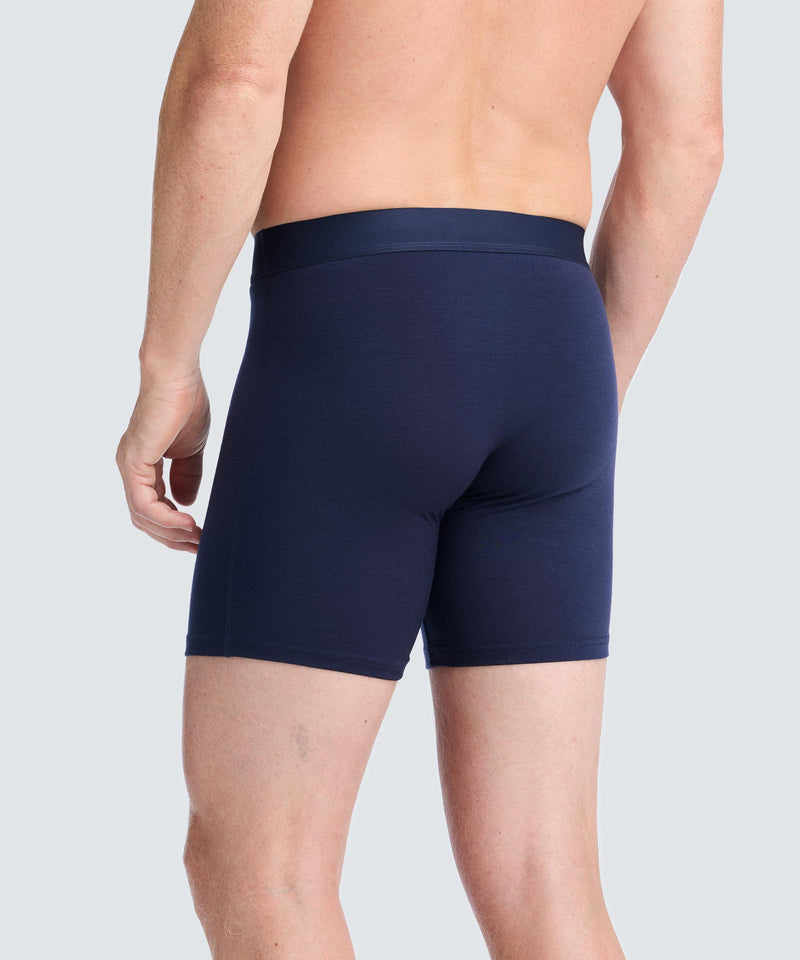
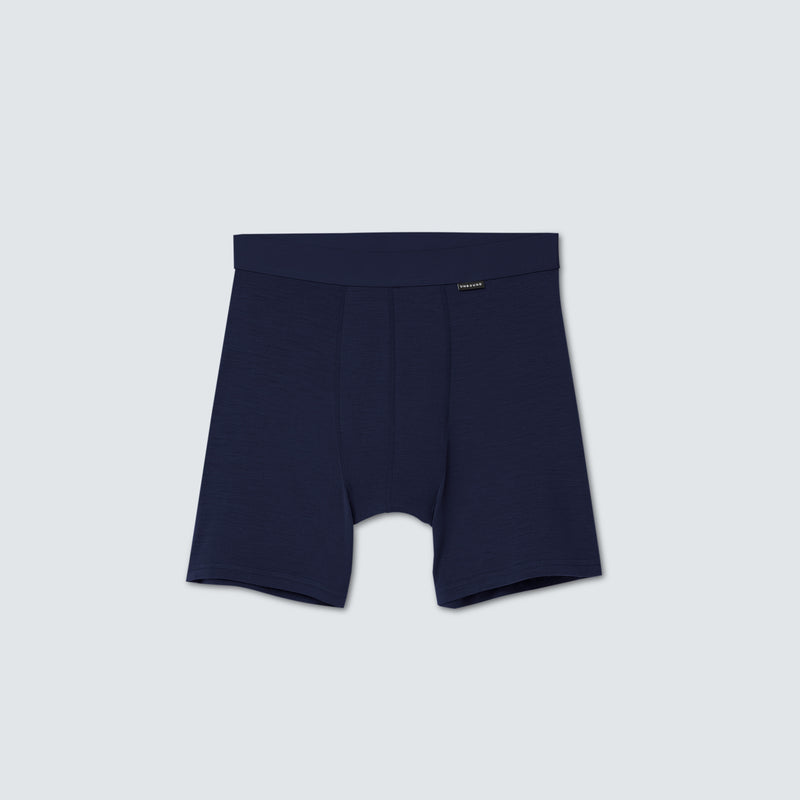
Unbound Merino's boxer briefs are one example of a pair built around these criteria — lightweight merino, clean construction, and a fit designed to work across travel days without fuss.
If you're comparing multiple options, don't overthink it. Prioritize fabric weight and fiber quality first, fit second, and construction details third. That order tends to sort out the field quickly.

Caring for Merino Underwear So It Lasts
Merino underwear is lower-maintenance than most people expect, but there are a few things worth knowing.
On the road, a quick sink wash with mild soap is the standard move. Rinse, gently press out excess water (don't wring), and drape to dry. In a well-ventilated room, overnight drying is common — though humid climates or poor airflow can slow things down.
At home, machine washing works fine: cold water, gentle cycle, and skip the fabric softener. Avoid high-heat drying. These steps protect the fiber and help a pair last significantly longer.
For a full care breakdown, How to Wash Your Merino Wool covers everything from travel sink-washing to long-term storage.

Quick-Reference Checklist: What to Look For
- Fiber diameter: Fine or superfine merino (under 20 microns) for comfort against skin
- Fabric weight: 150–170 gsm for most travel and warm-weather use
- Blend percentage: Small nylon or elastane content is normal and helps with stretch and shape retention
- Seam construction: Flatlock seams to minimize irritation
- Fit style: Boxer briefs for travel versatility; briefs or trunks if you prefer
- Care requirements: Machine-washable cold, no fabric softener, no high heat
- Sourcing transparency: Look for brands that disclose where their merino is sourced and processed
FAQ: Common Questions About Merino Wool Underwear
Can you really wear merino underwear multiple days? Many travelers do. Merino's natural odor resistance means a pair can often go longer between washes than cotton or synthetic equivalents. Individual results vary depending on climate and activity, but rotating two or three pairs is the practical approach most experienced travelers settle on.
Does merino underwear feel itchy? Fine-grade merino — typically under 20 microns — is a different category from the coarse wool you might remember. It's engineered to feel soft against skin. If you've only experienced traditional wool, merino is worth a second look.
How long does merino underwear take to dry? Faster than cotton in most conditions. In a well-ventilated room, overnight is common. Humid environments or poor airflow will slow things down.
Is merino underwear only for cold weather? No. Lightweight merino helps regulate temperature in both directions, which is why it's a popular choice in warm climates too — not just for winter layering.
Where do I start if I want to try a pair? Look for a pair that matches the criteria above — fine merino, lightweight, clean construction. Unbound Merino's underwear collection is one range built specifically around travel use.
The simplest test for whether merino wool underwear is worth it: think about the last trip where your underwear was the weak link. If you've been there — and most frequent travelers have — one or two pairs of merino can quietly solve a problem you've been packing around for years.